Should This Exist?

It’s live! The preview of my upcoming podcast Should This Exist! Go subscribe and listen to the preview, and if you like it, please leave a rating!

proxy.duckduckgo

Here’s the official blurb about it:

About Caterina Fake

Caterina Fake is Silicon Valley’s most eloquent commentator and dot-connector on technology and the human condition. As a humanist with a deep passion for history, literature, arts and culture, she has a unique perspective on the myriad unforeseen ways technology can impact our world. And as a celebrated tech pioneer herself, Caterina brings a deep knowledge of technology and an optimistic enthusiasm for entrepreneurs. In the early 2000s, Caterina co-founded Flickr and introduced many of the innovations — newsfeeds, hashtags, “followers,” “likes” — that laid the foundation for modern social media. (Though she’s quick to point out where social media has gone wrong). As an angel investor, advisor and board member, she helped build companies like Etsy, Kickstarter and Stack Overflow — which defined and nurtured new types of human-centered online communities. She’s now co-founder of Yes VC, an investment fund focused on early stage startups. For Caterina, hosting Should This Exist? reflects her career-long dedication to help technology fulfill its promise.

About ‘Should This Exist?’

Premiering on Thursday, February 21, Should this Exist? leads a new conversation to answer the question of our times: How is technology impacting our humanity? On each episode, an entrepreneur or scientist with a radical new technology will join Caterina on a journey to peer around corners, and glimpse their technology’s wildest potential to change human lives for the better — and the hidden forces that might send their vision sideways. A sneak preview of the first season is now available on the Should this Exist? page on Apple Podcasts.

The show’s first season will include the visionaries behind a headset that hacks your brain with electric fields so you can learn like a kid again; a fully automated chatbot that offers one-on-one therapy; a next-generation supersonic plane; a device that can read the expression on your face and know how you’re feeling; software that will translate between human and animal languages; and a scientific approach that allows humans to modify entire species of animals in the wild —among other unprecedented firsts.

Should this Exist? models a new kind of conversation between the entrepreneur or inventor and the world. Drawing on a wide range of fields — history, psychology, philosophy, the arts — Caterina leads the inventor through a conversation that sets aside the business model and examines the human case more closely. 

Scouts, Water, Lorena Bobbit

boy-scouts-girl-cub-scouts-promo.jpg

Scouts. Girls are now formally eligible to form boy scout troops. Not only was the copy editor asleep at their desk, the author did not note the inherent sexism of this odd new eligibility. Why not call both Girl Scouts and Boy Scouts “Scouts”? And are there boys clamoring to form girl scout troops? That would show some progress. As it has often been said, equality will have a chance not when girls can be more like boys, but boys can be more like girls.

Water. The state of water in the world in less than 500 words. This will be a big issue in the future if the population continues to grow as projected, and this is a good summary of the regions the problems will arise, and who is getting in front of the issue.

Lorena Bobbit. Of course the real story was not what was emphasized on late night TV–the penis. The real story was about years of marital rape, domestic violence and male entitlement. Did you know John Wayne Bobbit became a porn star after his penis reattachment surgery and was convicted and served time for tying a woman up and repeatedly raping her? All those jokes at Lorena Gallo’s expense are hard to countenance–but an upcoming documentary may set the story straight.


3 Recommendations: Kanopy, Recomendo and DF Tube

Screen Shot 2019-02-05 at 8.47.57 PM.png

Kanopy If you have a library card, you most likely have access to Kanopy, which is full of excellent movies, including a selection from the Criterion Collection, and the Bicycle Thief. I’m recommending it because I am still surprised at how few people know about it. The kids section is also full of good movies, sans garbage like My Little Pony Equestria Girls: Movie Night and Barbie and the Magic of Pegasus.

Recomendo, the mailing list from Kevin Kelly, Mark Frauenfelder & Claudia Dawson always has something to discover. KK wrote Cool Tools previously, which was a source of so many good links, and there is also a book of Recomendos.

DF Tube This is a chrome plugin that eliminates all the cruft around a YouTube video. For the past few months I’ve been trying to force YouTube to show me palatable content on my sidebar, but no matter how much crap I reject as “Not Interested” more crap appears. Since the fountain of crap is inexhaustible, I searched for a YouTube cleanup plugin. DF Tube–Distraction Free Tube– is so great! Everything bad — recommendations on the sidebar, crap on the homepage, inane commentary–vanishes!

Anxy, Hilma & Vassar

proxy.duckduckgo

  • I am a huge fan of the new magazine Anxy by Bobbie Johnson et al. which is a beautifully designed, thoughtful bi-annual magazine about our inner lives, our psychology and our behavior. Recent issues have centered on Boundaries, Workaholism and Anger. In the most recent issue, on the subject of Masculinity, I found some terrifying quotes from pre-teens, who, when asked the question, “What is Masculinity?” presented the most violent, aggressive and insensitive men as paragons of masculinity. Can we all watch The Mask You Live In again please? 
  • I’ve had many vicarious experiences, which are often better than original, immediate, actual, personal experiences. A wonderful example of this is in a short story–a very short story–by Lydia Davis, reproduced here in full:

Happiest Moment

If you ask her what is a favorite story she has written, she will hesitate for a long time and then sat it may be this story that she read in a book once: an English-language teacher in China asked his Chinese student to say what was the happiest moment in his life. The student hesitated for a long time. At last he smiled with embarrassment and said that his wife had once gone to Beijing and eaten duck there, and she often told him about it, and he would have to say the happiest moment of his life was her trip, and the eating of the duck. 

I recently had the experience of attending the Hilma af Klint exhibit at the Guggenheim vicariously, since all my friends have gone, and raved about it. Who says these things can’t be among your happiest moments?  I also feel as if I have seen Saturday Night Live through other people, never having seen it myself, as well as having read Thinking Fast and Slow and Sapiens by osmosis, surrounded, as I have been, with people who have in fact read it themselves. We can live through other people, much of the time, and experiencing the joy of other people as if it were your own is one way of guaranteeing your own happiness. 

  • Vassar, my alma mater, has a beautiful campus, full of trees and old buildings, exactly the way you imagine a college campus to look. I went back recently to give a keynote at the Sophomore Career Development event, and was happy to note that very few students were staring at their phones. 

More:

Have a look through the Vassar Quarterly to see what a great school Vassar is. I love small, liberal arts colleges, and my education there was exceptional. The cover of the most recent issue shows the campus in all its autumnal leaf-changing glory. And downtown Poughkeepsie is on track for a wonderful revival, having started some projects with the amazing non-profit design firm MASS Design Group

 This is a wonderful collection of very short stories by Lydia Davis, who also does beautiful translations from the French, such as Swann’s Way, the first book of In Search of Lost Time; a new translation of Madame Bovary, as well as translations from Maurice Blanchot, another of my favorites, such as The Gaze of Orpheus.


Another way I’ve vicariously experienced the Hilma af Klint exhibit is through this book, which I was given as a gift by another exhibit attendee. This, and her book of Notes and Methods, are gorgeous. 

Reducetarian, not vegetarian

I like a good steak. I really, really like a good steak. I order it rare. Other members of my family order it blue. And my grandfather used to eat his almost raw, instructing the griller, “just restore the body heat”, which, let’s be honest, is a really gross way to order food. That’s the kind of carnivores I come from. Tartare? Yes. Oh yes.

And I love animals, really really really. Animal rights? Makes me sick. My first exposure to the ghastliness of the industrial meat issue was Sue Coe’s terrifying book Dead Meat, which I read in 1996. More recently we watched the documentary Food, Inc. with the kids, probably the first horror movie they’ve seen. As the years have passed we’ve become more and more aware of the terrible things required to produce industrially farmed meat–through movies, articles, books the rise of various organizations promoting animal rights, even The Smiths album Meat is Murder.

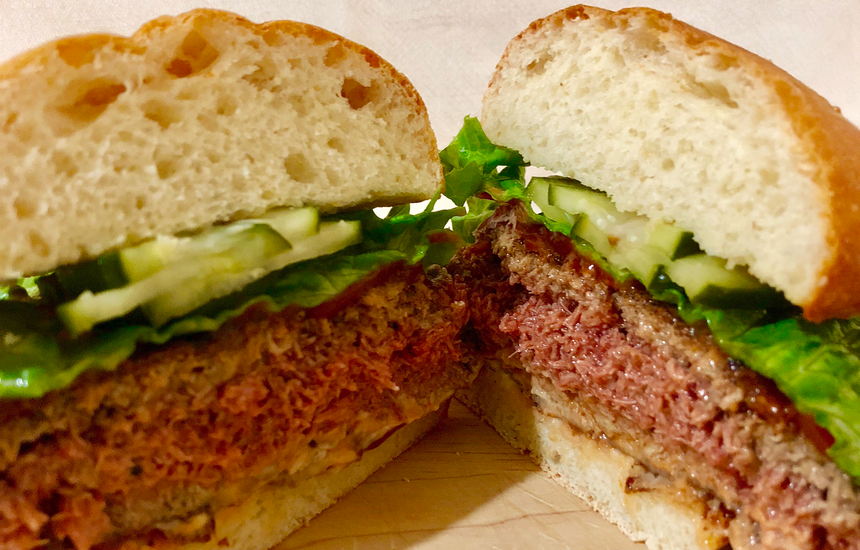
As investors, we’ve looked at– and sampled–a lot of alternative protein products: classics like Tofurkey, Garden burgers and Boca Burgers. Second wave meat alternatives like Soylent, Beyond Meat, and we always get an Impossible Burger at Gott’s at the airport before boarding flights. We’ve eaten crickets, witchetty grubs, a vast array of soy products pretending to be meat, fake meat comprised of mushrooms and beets, and bland, frightening and generally unidentified frankenfood.

I am a failed vegetarian. My efforts to eliminate meat from my diet made me realize how anemic I was: I wasn’t good about taking my vitamins or making sure I had a good source of iron. I fainted several times, and ended my stint as a vegetarian when I entered a kind of fugue state and found myself sitting at the counter of Jackson Hole Burgers eating a 7 oz. burger. That is not a small amount of meat. But what’s a woke carnivore to do?

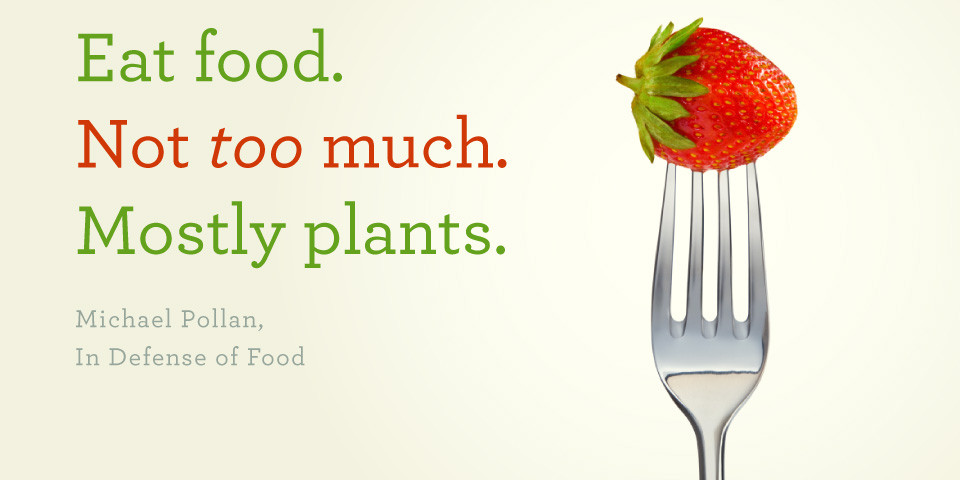
Reduce. Our kids call themselves not vegetarians–they still like the occasional slice of bacon–but reducetarians. Say it out loud: it sounds better than it looks. And it makes sense doesn’t it? I remember the short TED talk by Graham Hill in which is proposed to be a “weekday vegetarian” which is along reducetarian lines. Just eat less.

This is the future of food. Millennials are all on board, and leading the charge. 70% of the world population reportedly is either reducing meat consumption or leaving meat off the table altogether, according to market research from GlobalData, who works with 4000 consumer brands.

I really struggle with this, I’m a true carnivore. Some people have told me it’s my blood type, and maybe I need to take my vitamins. But it’s getting easier and easier for us woke carnivores to

like we’ve wanted to.

The Environmental Cost of 2 Day Shipping

101500536-453085847.530x298

Worth emphasizing the environmental cost of 2 Day shipping, which comes with Amazon Prime, is huge, when compared with 3-5 day shipping, per this article on Grist. When I realized this, I started checking the box that says “No-Rush Shipping”.

Free two-day shipping — the hallmark of Amazon’s plan to squeeze out traditional retailers — burns through significantly more emissions than standard shipping or traditional in-store shopping.

When you wait three to five days for shipment, Jaller explains, Amazon has time to find the most efficient (and cheapest) way to deliver goods. Aviation is by far the most carbon-intensive transit option, and with more time the company can route your package by land, instead of by air…and group your package with other, similar deliveries.

“The concept of Amazon Prime pushes us towards more emissions…and makes the marginal cost of purchases very small, so you have motivation to buy more. And of course, that’s what Amazon wants.”

And the more shipments, the more packaging. The more packaging, the more waste. Go “No Rush”!

The Social Media Transformation of César Sayoc: I disagree

In today’s New York Times, I find an article tracing the evolution of the Trump Supporter’s campaign to kill Democrats from his “normal” Facebook posts, to his “extremist” Twitter account. The article begins:

Until 2016, Cesar Altieri Sayoc Jr.’s life on social media looked unremarkable. On his Facebook page, he posted photos of decadent meals, gym workouts, scantily clad women and sports games — the stereotypical trappings of middle-age masculinity.

This may be common, but it is far from “unremarkable” as reporter Kevin Roose states.  I remarked many things about it. Then a quote from an expert in digital journalism:

“He went from posting pictures of women, real estate, dining and cars to posting pictures of ISIS, guns and people in jail,” said Jonathan Albright, the research director for Columbia University’s Tow Center for Digital Journalism. “It’s a remarkable change.”

From unremarkable to remarkable. However, here is what I remarked in the first incarnation of Mr. Sayoc’s online persona.  “Scantily clad women” denotes objectification; women as things, not people; decadent meals signal affluence and pleasure; real estate and cars are signs of prestige, money and power. All of these are signs of toxic masculinity, an idea of human relationships as transactional and impersonal, a technocratic bent, and a desire for male domination. These are completely consistent with the Twitter account, the support of Trump, and, eventually, the pipe bombs.

I’d suggest the proper way to frame this article is as a continuum of his offenses, displayed on social media. Just as many mass killers begin with domestic violence, many perverts as peeping toms; just as sexual harassers will forge expense reports, or take credit for other people’s work, the signs of violence are often visible in other actions and evidenced in seemingly minor social media posts online. “Criminal versatility” is common, and criminal tendencies can be read in early prejudices. I see the signs of César Sayoc’s tendencies already writ large on his Facebook page.

Arrival in San Francisco, 1989

On the first day I arrived in San Francisco, I wandered down to Fisherman’s Wharf, where I bought a sandwich, and sat on a bench with my book, reading, eating it and enjoying the salt air. A small black man, ragged, seemingly homeless, approached me, and asked for my sandwich. Which I refused to give him. So he started shouting, at the top of his lungs, “RACIST! RACIST” and all the tourists waiting on line to catch the boat to Alcatraz stared at me angrily, racist that I was. He wouldn’t stop, so I walked briskly away, and he continued following me, screaming “RACIST! RACIST!”, until I started running and ran up a hill and finally lost him and settled in at a nearby cafe where I had a cup of tea and caught my breath.
As I was sitting there, addled by this distressing experience, and trying to calm down, a man came up to me and without preamble said:

If you were going to get a pet
what kind of animal would you get.
A soft bodied dog, a hen­­––
feathers and fur to begin it again.
When the sun goes down and it gets dark
I saw an animal in a park.
Bring it home, to give it to you.
I have seen animals break in two.
You were hoping for something soft
and loyal and clean and wondrously careful­­––
a form of otherwise vicious habit
 can have long ears and be called a rabbit.
Dead. Died. Will die. Want.
Morning, midnight. I asked you
if you were going to get a pet
what kind of animal would you get.

And then smiled, bowed, and left the café. What an extraordinary city, I said to myself, and looked out the window into the overcast sky, a sky I would come to know so well. And I tried for a long while to find the poem, which I did, finally. It turned out to be by Robert Creeley, a poet from San Francisco and environs, and it was called If You.

I know it by heart now, and it was difficult to fathom. What was so unsettling about it? Why was it so rich in meaning?  It starts off so innocently, like a question by a grandmother to a child: the world is gentle and kind, and in order, and in the world are pets, so dear to us, and one can choose one as a friend. Suddenly you’re presented with a hen, which is not a pet at all–disconcerting–and then the author tells of animals breaking in two. Pets are animals, after all, and what is an animal? Hoping is introduced, and it fails by force of vicious rabbit. Death comes, finally, in all its forms, but then–the bliss of returning safely to the question again–a recovered innocence, and back again to the safety of being able to choose, and not have things happen to you.

Oh it is a magnificent poem. I was profoundly struck by it then, and every time I think of it. What a gift the stranger gave me, my first strange day in San Francisco.

Harassment, Redress & Roman Law

It seems as if, on the internet, harm can be done to others immediately, continuously, thoughtlessly, and unceasingly, and worse, without consequence to the perpetrator, who enjoys only satisfaction, righteousness, and immunity. It seems that a willingness to participate in conversations online is an implicit agreement to be subjected to harassment and abuse. Countless people–let me just say, most people I know with active online lives–have suffered this. People have committed suicide because of this abuse, old and young, but especially the young; countless people have withdrawn from both the online and offline world after having been subjected to online bullying; the victims, most often coming from the most vulnerable, protected groups, continue to suffer and retreat further from the full embrace of the world and its possibilities.

Those who suffer from racism, sexism, harassment and a daily parade of micro-aggressions have no recourse under any company’s Terms of Service, not to mention the law, unless an actual assault has taken place–and as is well documented, few of those cases are prosecuted, and of those, a vanishingly small number result in conviction. The punishments mostly accrue to the victim reporting the crime.

Online, in the various communities I’ve participated in, built and managed, I’ve written a half dozen Community Guidelines, and spent countless hours thinking through this problem. I’ve kicked countless perps off a dozen web sites, banned, muted and used secret troll-thwarting ninja techniques to perma-ban awful people using robust, well designed admin interfaces. I’ve even reported bad actors to the FBI.  I couldn’t think of how, under the law, the people who suffer from these agonies could be protected from, or receive redress from the thugs whose wrongs they had endured.  But today I happened upon an article about sexual harassment and Roman law, which presented a vision of the law that I hadn’t thought possible: Here’s what it said.

From its earliest codification in the Twelve Tables of 450BC, Roman law gave people a right to recover damages for personal injury.

The law expanded over the centuries to protect an increasingly wide range of personal rights by means of an action known as the actio injuriarum (or action for injuries). By the time of the publication of the Digest of Justinian in 533AD, the action protected three groups of rights:corpus (bodily integrity), fama (reputation), and dignitas (dignity).

This is where the major difference lies between our English-based law of torts and Roman law: although the law of torts allows a plaintiff to sue for bodily injury and defamation, it offers no protection for dignity and therefore no right to sue for verbal insult, no matter how offensive.

The actio injuriarum lives on in modern legal systems. A good example is South Africa, whose legal system is based on Roman law. There, the action has been used to recover damages for sexist verbal insults, unwelcome propositioning for sexual intercourse, and unwelcome exposure to pornography. The action also protects privacy, so it has been used to recover damages in cases involving peeping Toms, stalking, and the publication of intimate facts about people’s private lives.


Great Things, and “The Everglades”, by Marjory Stoneman Douglas

MargoryStonemanDouglas

From a review by Michael N. McGregor in Tin House of The Everglades: River of Grass, a book by Marjory Stoneman Douglas, whose name is probably familiar to you now, because of the massacre of students at the school which bore her name. I was struck by this passage, which McGregor quoted, of the men who came to drain the Everglades:

Before that, in all those years of talk and excitement about drainage, the only argument was a schoolboy’s logic. The draining of the Everglades would be a Great Thing. Americans did Great Things. Therefore Americans would drain the Everglades. Beyond that–to the intricate and subtle relation of soil, of fresh water and evaporation, and of runoff and salt intrusion, and all the consequences of disturbing the fine balance nature had set up in the past four thousand years–no one knew enough to look. They saw the Everglades no longer as a vast expanse of saw grass and water, but as a dream a mirage or riches that man men would follow to their ruin.

To do Great Things. It has a powerful, irresistible appeal, but is almost always interpreted wrongly, and used to justify waste and destruction. In its name the Everglades were sold to conquistadors who made fortunes selling the plumes of ibises to society ladies for their hats, and hides of alligators for their shoes; the wildlife died off, the fires came, and the salt intrusion of the oceans.