Sesat School in Wired

homeschooling - the cooks

I’m happy that Jason Tanz, who has written before about the sharing economy, wrote an article about homeschooling for Wired Magazine: The Techies Who Are Hacking Education by Homeschooling Their Kids. It gets across the entrepreneurial and DIY nature of the self-taught, and how the future will require us to be more inventive, take responsibility for our own education and be more entrepreneurial in our lives, education and pursuits. We were also happy that our micro-school, Sesat School, was included in the article.

Most of my interview was not included in the article, and unfortunately the one quote that was included made it seem as if I were endorsing an exclusive, privileged education that readers should “feel free to roll [their] eyes” about. Nor am I anti-public school or anti-democratic. This was unfortunate.

My public school education included a love of poetry and classical music–I was not homeschooled, and in the article it is implied that my experience has something to do with homeschooling. It did not. I was speaking in the context of what was good about public school education, and how being different didn’t hurt, but helped me in life.

In the interview with Jason I had said that the “gifted children’s programs”, in which I had participated in public school, were elitist and that all children should be able to participate in them. In many ways it was a reaction against privilege that led me to homeschooling. One of the many reasons I started looking into homeschooling — or independent education, as it is better named — was that I was repelled by the line of limos outside the private schools in the morning.

I was especially happy about this paragraph:

Problems arise, the thinking goes, when kids are pushed into an educational model that treats everyone the same—gives them the same lessons and homework, sets the same expectations, and covers the same subjects. The solution, then, is to come up with exercises and activities that will help each kid flesh out the themes and subjects to which they are naturally drawn.

The best part of the New Jersey public schools “gifted program” was exactly that.

I am grateful that Jason wrote this article. It does a great service to homeschooling in general, and delineates its entrepreneurial and DIY ethos very well. I just don’t want to be the poster child for its “privilege”– the very thing I’m resisting.
The Facebook Sonnet, by Sherman Alexie

Welcome to the endless high-school
Reunion. Welcome to past friends
And lovers, however kind or cruel.
Let’s undervalue and unmend

The present. Why can’t we pretend
Every stage of life is the same?
Let’s exhume, resume, and extend
Childhood. Let’s play all the games

That occupy the young. Let fame
And shame intertwine. Let one’s search
For God become public domain.
Let church.com become our church

Let’s sign up, sign in, and confess
Here at the altar of loneliness.

The Little Virtues, by Natalia Ginzburg

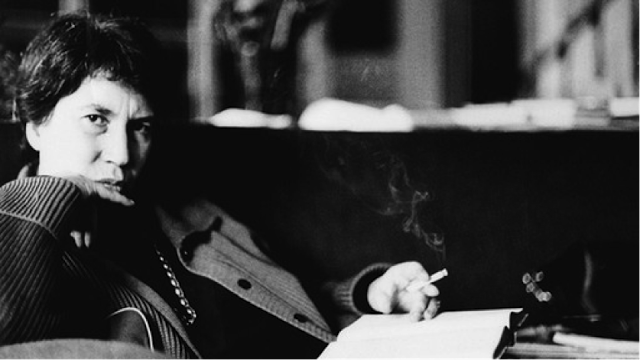
Natalia Ginzberg

“As far as the education of children is concerned, I think they should be taught not the little virtues but the great ones. Not thrift but generosity and an indifference to money; not caution but courage and a contempt for danger; not shrewdness but frankness and a love of truth; not tact but a love of ones neighbor and self-denial; not a desire for success but a desire to be and to know.”

Even more tips for recruiting women

In your recruiting literature:

1. Talk about the overarching goal, why you are building what you’re building, and for whom
2. Talk about the whole product
3. No references to size (Massive, Huge, Gargantuan)
4. No references to war or assassination. (Ninja, Killer, Slaughter)
5. No references to defeating or subordinating others: (World Domination, We Rule)

The Pace Layers of Civilization

Pace Layers of Civilization

One of my favorite diagrams is from Stewart Brand’s book “The Clock of the Long Now” Derived from a diagram in Brand’s prior book “How Building Learns”, alongside an idea of Freeman Dyson’s, Stewart Brand expands on the idea of the pace layers of civilization in The Clock of the Long Now. Here are some note from the chapter in which this diagram appears:

“The fast parts learn, propose, and absorb shocks; the slow parts remember, integrate, and constrain. The fast parts get all the attention. The slow parts have all the power.

We can examine the array layer by layer, working down from fast and attention-getting to slow and powerful. Note that as people get older, their interests tend to migrate to the slower parts of the continuum. Culture is invisible to adolescents but a matter of great concern to elders. Adolescents are obsessed by fashion, elders bored by it.

The job of fashion and art is to be froth: quick, irrelevant, engaging, self-preoccupied, and cruel. Try this! No, no, try this! Culture is cut free to experiment as creatively and irresponsibly as society can bear. From all this variety comes driving energy for commerce…and the occasional good idea or practice that sifts down to improve deeper levels, such as governance becoming responsive to opinion polls, or culture gradually accepting multiculturalism as structure instead of grist for entertainment.

If commerce is completely unfettered and unsupported by watchful governance and culture, it easily becomes crime…Likewise, commerce may instruct but must not control the levels below it, because commerce alone is too shortsighted.

Infrastructure, essential as it is, cannot be justified in strictly commercial terms. The payback period for such things as transportation and communication systems is too long for standard investment, so you get government-guaranteed instruments such as bonds or government-guaranteed monopolies. Governance and culture must be willing to take on the huge costs and prolonged disruptions of constructing sewer systems, roads, and communication systems, all the while bearing in mind the health of even slower “natural” infrastructure, such as water, climate and so on.
Education is intellectual infrastructure; so is science. Very high yield, but delayed payback.

Culture’s vast slow-motion dance keeps century and millennium time. Slower than political and economic history, it moves at the pace of language and religion. Culture is the work of whole peoples.

As for nature, its vast power, inexorable and implacable, continues to surprise us….When we disturb nature at its own scale, as with our “extinction engine” and greenhouse gases of recent times — we risk triggering apocalyptic forces. Like it or not, we now have to comprehend and engage the still Longer Now of nature.
The division of powers among the layers of civilization allows us to relax about a few of our worries. We should not deplore rapidly changing technology and business while government controls, cultural mores, and so-called wisdom change slowly; that’s their job….The total effect of the pace layers is that they provide many-leveled corrective, stabilizing negative feedback throughout the system. It is precisely in the apparent contradictions of pace that civilization finds its surest health.”

Ursula LeGuin on Resistance and Change

Ursula K Le Guin

Ursula LeGuin, in her acceptance speech for the Distinguished Contribution to American Letters at the National Book Awards, said this, in defense of writing and humanity:

Hard times are coming, when we’ll be wanting the voices of writers who can see alternatives to how we live now, can see through our fear-stricken society and its obsessive technologies to other ways of being, and even imagine real grounds for hope. We’ll need writers who can remember freedom – poets, visionaries – realists of a larger reality.

Right now, we need writers who know the difference between production of a market commodity and the practice of an art. Developing written material to suit sales strategies in order to maximise corporate profit and advertising revenue is not the same thing as responsible book publishing or authorship …

Books aren’t just commodities; the profit motive is often in conflict with the aims of art. We live in capitalism, its power seems inescapable – but then, so did the divine right of kings. Any human power can be resisted and changed by human beings. Resistance and change often begin in art. Very often in our art, the art of words.

How to recruit women in tech

Etsy’s work in creating a friendly place for women in tech should be widely emulated. Don’t just sit and wait for women to apply for jobs. Make sure your company is friendly to women. Let it be known that you are interested in recruiting and retaining women. Build your own pipeline for applicants.

Also, read this interview with Maggie Nelson of Findery, about becoming a software engineer.

Links to Things I Like

Tall Poppy Syndrome

  • The Death of Adulthood In American Culture. I talked about the tragic loss of American adulthood in an interview with Free Lunch Diaries a couple years ago. Oddly, people are also talking about the death of American Childhood. Maybe we’re all merging into a single, unstratified Age. Which is approximately 17.
  • Do you Speak Startup? It’s easy to agree with this article, since it builds on one of my earlier blog posts.
  • The “Ringo Starr Strategy” is a concept I came up with today, which means, if you can’t be great at something, surround yourself with people who are.
  • The Law of Jante, which is the Scandinavian tendency to put the collective before the individual, but is another way of describing Tall Poppy Syndrome (a term I didn’t realize had its origins in The Histories of Herodotus). I first learned of The Law of Jante in an interview with Karl Ove Knausgaard.

Memorization, Facts and Learning to Learn

“Never memorize what you can look up in books” is a quote often attributed to Einstein, though what he actually said was somewhat different. He was asked, but did not know the speed of sound as included in the Edison Test. When this was pointed out, he said, “[I do not] carry such information in my mind since it is readily available in books. He also said, “…The value of a college education is not the learning of many facts but the training of the mind to think.” See also Ray Bradbury, in Fahrenheit 451:

“Cram them full of non-combustible data, chock them so damned full of ‘facts’ they feel stuffed, but absolutely ‘brilliant’ with information. Then they’ll feel they’re thinking, they’ll get a sense of motion without moving. And they’ll be happy, because facts of that sort don’t change. Don’t give them any slippery stuff like philosophy or sociology to tie things up with. That way lies melancholy.”

The single thing I’ve found it valuable to memorize is poetry. As a child I learned hundreds of poems by heart, which I can recite even now. I wanted to become a writer, and felt that poetry was perfected language, so having it in my subconscious mind would make the music of language always available to me.