Three Great Findery Notemaps

There are so many great notemaps in Findery. Here are some:

Lost Angeles. Weird, interesting, and off the beaten path in Los Angeles, and isn’t Los Angeles already weird and interesting? Next trip to Los Angeles, this is the one I am going to follow.

Changing New York. An amazing walk through history, using Berenice Abbott’s photographs as a jumping off point. Including McSorley’s Ale House, which is still in operation. 

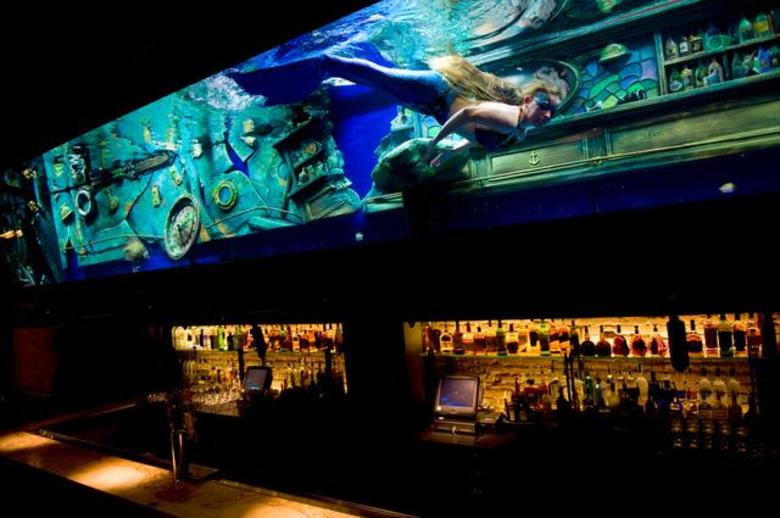
Mermaids are Real. One of my own notemaps, which collects all the notes about mermaids on Findery, for a worldwide Mermaid tour! There’s a bar in Sacramento where a real mermaid swims in a tank behind the bar.

Isolation and the Homestead Act

I had never understood why the farmlands of the US had been settled in such a sparse and isolated way, whereas the farming communities in Europe seemed closer, more convivial, centered around village life. It turns out it was mostly due to the Homestead Act, passed by Abraham Lincoln in 1863, which granted land to homesteaders, 160 acres each, from unappropriated federal land.

I’ve been reading the autobiography of Loren Eiseley, “All the Strange Hours”, and found the explanation. In it he wrote:

The medical observers of the early century had a good deal to say about the life of women in soddies, on lonely homesteads, and what it could do to them. Americans made a mistake they have been paying for ever since. In response to the Homestead Act they have been strung out at nighttime into a vast solitude rather than linked to the old-world village with its adjoining plots.

Sod House
A Milton, North Dakota, photographer took this picture of John and Marget Bakken and their two children, Tilda and Eddie, in front of their sod house in Milton in 1898. John Bakken was the son of Norwegian immigrants, who homesteaded and built a sod house in Milton in 1896. This sod house was used as the basis for the design of the Homestead Act Commemorative Stamp in 1962.

Sitting Shiva for Stan, and Shared Memories

A lovely and wonderful man, Stan Berger, died the day before yesterday after a long illness, and I went to sit shiva with his family and friends last night. I have been a very close friend of his daughter for 17 years now and spent a lot of time with her dad over the years, when she was living at his house after starting her new company, having Passover seder with his mother in Brooklyn, and seeing him on holidays and birthdays. He was a kind and loving man, with a brilliant mind, and a professor at Berkeley. His love for his daughters is what I remember most about him. His love was enormous, and unconditional. He celebrated them every time they met, with new joy. He held them during times of sadness, protected them when they felt threatened. He sustained them through the bad boyfriends, the pierced noses, the regrets and mistakes. He was in awe of their intelligence, their accomplishments, their beauty, their social lives, their boyfriends. Some of the love he had for his daughters was reflected on their friends too, and I was one who basked in his loving glow. “He was so proud of you,” Maya said, out of the blue. As if he were my own dad. I loved him too.

We sat shiva, and celebrated his life. Telling stories, remembering, and correcting others memories (“Let me tell you what his brother had hidden in the bedroom of their apartment!” “What! You applied to Oxford? I didn’t know that…” “He was the one who hired me into the department at Berkeley!” “He supported the student movement, but didn’t participate. He was a new, young professor. Back then it was like this…”). Sharing memories all night long.

Today I ran across an article referring to research done around transactive memory, a fancy way of saying that we share our memories with our spouses and partners, colleagues, children, parents and friends, that they are part of us by virtue of their memories of shared experiences. It was an idea developed by psychologist Daniel Wegner, who died in July of this year. The making of memories, keeping them, and telling the stories over and over is the very material of our lives. Our memories are jogged, amended and embellished by the memories of others, and this shared memory is one of the greatest benefits of long-term relationships. After a death, or a divorce, or a division, part of you is lost, because the shared memories are lost. “What was that story he used to tell me at bedtime when I was small?” After he dies, you can’t ask him anymore, and it is so much loss.

We’re sad, and we celebrate. We celebrate the memories we have, and the memories we made. Goodbye, Stanley Berger, Goodbye.
How the World will End: Possibilities

Some say the world will end in fire,
Some say in ice.
From what I’ve tasted of desire
I hold with those who favor fire.
But if it had to perish twice,
I think I know enough of hate
To say that for destruction ice
Is also great
And would suffice.

— Robert Frost

Last year I met a man who did catastrophe analysis for the Federal government. He spent his days thinking about what disasters were possible, calculating their probability and doing estimates of their cost in human life, as percentages of GDP, and as breaches of national security. What a way to spend your days! As I listened to him talk my imagination was blooming with a thousand mushroom clouds, and a thousand dystopian scenarios. It was fascinating.

I just found the notes I jotted down later, which tell a story of the world ending in a thousand ways. Here they are:

Societal collapse

  • Access to water
  • Population growth
  • Inequality

Climate Change
Caldera under Wyoming, the Yellowstone Bulge (See Yellowstone is rising on swollen “Supervolcano”. )
Undersea Range
Ocean acidification
Nuclear Strike

  • North Korea
  • China
  • The rapidly declining population of Russia

Cyber Attack

  • Power Grid
  • Air Traffic Control
  • Military

Pandemic
For Total Destruction, 80% of GDP:ASTEROID

Pop-Up Magazine & Commencement

  • Pop-Up Magazine is an amazing “live” magazine that started here in San Francisco, and consists talks, performances, demos and slide shows in front of a live audience. It is a live event that only happens once, and is unrecorded, a rarity in these days of constant recording and archiving. It is almost impossible to get tickets — they go on sale at noon, and the entire Davis Symphony Hall — thousands of seats — is usually sold out by 12:05. Somehow we got tickets off the waiting list and were able to go on Monday night. The theme of the night was music, and framed by Beck’s collection of sheet music, performed by various artists — some were amazing, some were average. Stories about music, stories, songs. The ephemeral is so rare.
  • Today is Commencement ceremonies for The New School at Jacob Javits, where I am to receive an Honorary Doctorate. This will be the first graduation since Junior High School for Joi Ito, who is also receiving a degree. He wasn’t sure what the protocol was for robes and such, and we told him it was traditional to go naked beneath your robes. We’ll see what he shows up in.
  • While out here, I visited Donald at Findery East, and interviewed him for the blog about using Findery for his road trip. Williamsburg is so expensive these days!
  • We ate last night at Chez Sardine, where the music was too loud, and the service slow (though kind, and accommodating), but the food was excellent.

Scrapbook

  • Apartamento, a magazine out of Spain, but written in English, is one of my favorite magazines. The latest issue just arrived in the mail today and I am happily listening to YLE and leafing through it.
  • I was in NY last week for an Etsy board meeting — I love that company! — and a bunch of other meetings.
  • There is some amazing digital media at The New York Public Library, which I got to see too (after a lovely lunch at Szechuan Gourmet), and some beautiful maps. Hopefully some of the amazingness will be coming to Findery soon.
  • I’m sure there was some amazing art at the Frieze Art Fair, but I wasn’t able to find it. However, found some friends there, which was even better. And the boat to and from was lovely.
  • Mookie is an exceptional Westie that lives in the West Village. We walked him.
    Mookie

  • The wall at Le Philosophe is covered with French philosophers, and supposedly, if you are able to name all of them, they will pay for your meal. I was only able to identify Simone de Beauvoir, Sartre, Descartes and, I think, Foucault. And, I think, Luce Irigaray. The food was amazing, and I was happy to pay for it. Or, rather, to have it paid for on my behalf. Duck, hear? And the snails to start, which were as unlike any snails I’d had before as it was possible to be. Delicious.
  • Later, after a close call, we headed to Marie’s Crisis Cafe, a singalong piano bar specializing in show tunes. We managed some Summer Lovin, from Grease, and Let The Sun Shine In, from Aquarius, while managing our Tom Collinses.

Proust on Newspapers

What I fault newspapers for is that day after day they draw our attention to insignificant things whereas only three or four times in our lives do we read a book in which there is something really essential. Since we tear the band off the newspaper so feverishly every morning, they ought to change things and put into the paper, oh, I don’t know, perhaps…Pascal’s Pensees! …and then, in a gilt-edged volume that we open only once in ten years…we would read that the Queen if Greece has gone to Cannes or that the Princesses de Leon has given a costume ball. This way the proper proportions would be te established.

– Marcel Proust, In Search of Lost Time

Doping, Adderall and The Meritocracy

Soon after the Lance Armstrong doping scandals emerged last year, I was talking to friends about the prevalence of doping, and my shock. “How could it be true?” I asked. And my friends said, “Are you being willfully naïve? Doping isn’t optional, it is required! they informed me. Riders were kicked off teams for NOT doping. And it’s not just biking…” and a lecture on professional sports, and how they work, ensued. You can do a blood transfusion, and train while on drugs, then do another transfusion before the testing to clean up your blood. There are new, undetectable drugs.

Next they told me you could take Adderall and improve not only your basic school performance, but also your S.A.T. scores. Kids were opting out of studying, and the months-long, grueling Kaplan SAT prep courses and popping pills instead. One girl, now at an Ivy League college said:

“Do I want only four hours of sleep and be a mess, and then underperform on the test and then in field hockey? Or make the teachers happy and the coach happy and get good grades, get into a good college and make my parents happy?”

Madeleine estimated that one-third of her classmates at her small school, most of whom she knew well, used stimulants without a prescription to boost their scholastic performance. Many students across the United States made similar estimates for their schools, all of them emphasizing that the drugs were used not to get high, but mostly by conscientious students to work harder and meet ever-rising academic expectations.”

“Steroids are now in the middle schools,” one of my interloctors said grimly. And even before middle school, parents are “redshirting” — putting 6-year-old kids in kindergarten to give them an advantage — they’ll be bigger, stronger, and more advanced than their peers, an advantage that appears to follow them throughout their lives, especially in sports.

If there is a national, secular religion in the United States it is the belief that America is the Land of Opportunity, that we are a Meritocracy, that any kid, no matter who they are, or where they come from, can work hard and move up in the world. That their effort matters. “You too can be the President,” every American kid is told. But one unintended consequence of this belief, it is that, as a result of our being a meritocracy, if you have not succeeded, you are of lesser merit. It is shameful to be a failure in this country. Everything from doping to boob jobs speaks to the struggle to gain an advantage in a competitive world. But this is a rational response to a society where the winner takes all.

So how do we keep the dream alive? How do we make it a dream worth striving for? I am reminded of one of my most retweeted tweets: “Avoid a life of chasing prizes not worth winning.” You’ve been such amazing commenters, I’d love to hear your ideas.