Dave Eggers on the Ingenious podcast

Listen to the show on Apple Podcasts, Spotify, or wherever you listen.

“We feel that to reveal embarrassing or private things, like, say masturbatory habits (for me, about once a day, usually in the shower), we have given someone something, that, like a primitive person fearing that a photographer will steal his soul, we identify our secrets, our pasts and their blotches, with our identity, that revealing our habits or losses or deeds somehow makes one less of oneself. But it’s just the opposite, more is more is more – more bleeding, more giving. These things, details, stories, whatever, are like the skin shed by snakes, who leave theirs for anyone to see. What does he care where it is, who sees it, this snake, and his skin? He leaves it where he molts. Hours, days, or months later, we come across a snake’s long-shed skin and we know something of the snake, we know that it’s of this approximate girth and that approximate length, but we know very little else. Do we know where the snake is now? What the snake is thinking now? No. By now the snake could be wearing fur; the snake could be selling pencils in Hanoi. The skin is no longer his, he wore it because it grew from him, but then it dried and slipped off and he and everyone could look at it.

And you’re the snake?
Sure. I’m the snake. So, should the snake bring it with him, this skin, should he tuck it under his arm? Should he?

No?
NO, of course not! He’s got no fucking arms! How the fuck would a snake carry a skin? Please.

― Dave Eggers, A Heartbreaking Work of Staggering Genius

We’re the snake.

And I have a dog in this fight.

Because I deeply believed at one time that we were all the snake and that by being the snake (at least how Dave is describing it here, back in his very first book) the more we showed of ourselves and left our skins behind, the better. Of course that doesn’t mean we should all go online and tell on ourselves. But we should be able to do what writers do (or artists, musicians—anyone really—priests, dog trainers, maintenance workers, phlebotomists) which is make something which, and be somebody who, reveals ourselves and is true to our warty, actual selves. Not be too precious about ourselves. We sound so young when we say this, but: Let’s stay true to the people we were and the dreams we had.

The story about how indigenous people didn’t want to be photographed because they feared it would steal their souls has new currency in the age of AI. I know this first hand. I was a big advocate for free culture and the open software movement in the early aughts, implementing Creative Commons licenses in Flickr, thereby creating the largest library of shareable media in the world, at least, at the time. I shared my own photos with Creative Commons licenses and joined the Creative Commons board. Artists and filmmakers and other creative people were able to use them to make fantastic things. Jonathan Coulton wrote a song (and made a short movie) named after Flickr using the Creative Commons licensed photos—that’s MY dog with glasses!

Flickr photos appeared in low budget movies, in band posters, in this incredible installation by Erik Kessel at a gallery in Amsterdam. The installation featured prints of every single photograph uploaded to Flickr within a 24-hour period. The more than a million photos are piled up nearly to the ceiling, and spill over into several rooms.
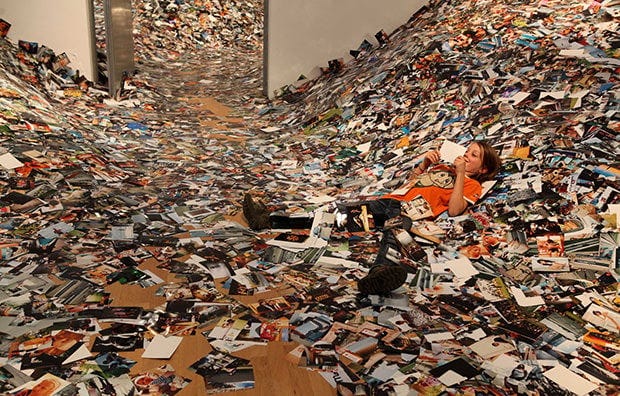
I never got to see it in person. It was an artwork about how we are drowning in photos, in media. How no one can look at all of the photos. It was still a newish idea at the time, 2011. What a wonderful time that was.

It was an era of optimism and trust. We trusted humanity. We knew people to be honest, well-meaning. We trusted technology, audiences, artists—there was so much trust, we were just bursting with trust. It seems almost inconceivable now, so jaded and weary we’ve become. We believed that people are essentially good, operating in good faith, trustworthy, reasonable. We were not wrong. But we discovered that even if 999 out of a thousand people are honest and trustworthy, one bad actor can be incredibly destructive. A mob of angry tweeters. Or, enemy nations.

I talked about this with Chris Anderson, who had been the Editor-in-Chief of Wired magazine, on my last podcast Should This Exist?. He had an open source drone company, 3D Robotics, and they open sourced their drone software. A lot of hobbyists hacked their Lego Mindstorms and had a lot of fun making flowers or M&Ms rain down on children’s parties, searching for lost elephants in vast African wildernesses and other great things. Then one unhappy day, on the front page of the New York Times, Chris learned that ISIS had been using his drone software to kill people.

This was about as bad of a consequence as you can imagine. The worst consequence of sharing something online. But it was also happening in my world, the online world. Media, social media, was becoming more and more toxic. We had started out as the aforementioned snakes, sharing our photos, jokes, stories, poems, lives. But at many of the hosting companies, it was no longer about sharing; a lot of it was about stealing. Harvesting and exploiting your “data”, which you had thought of as your life. To my surprise, chagrin and increasing anger, I realized that the Creative Commons licensed photos on Flickr were being used to train AI. That even though no human could ever look at every single one of the photos in Erik Kessel’s artwork, or in the Creative Commons archive, or anywhere on the internet, a computer could.

Another conversation I had during the first season of Should This Exist? was with Sam Altman of OpenAI, a company we now know best as the maker of ChatGPT, but which at the time was a non-profit looking to protect humanity from the consequences of what was in the process of being invented. Money came, moral compasses spun around and lost true north—we know the rest. And now we’re seeing the results, watching the whole experiment unfold in real time: people’s faces and data and art and words being stolen, repurposed and put into formats and contexts they never intended or wanted, exploited for purposes that hadn’t existed when they innocently shared pictures of their weddings and kittens online, swindled and diddled and flimflammed and worse. All those words and images, pressed into service for manufacturing lies, flipping elections, and creating enemies where once were friends.

Which brings us to today’s podcast with Dave Eggers. He is the writer, artist, philanthropist and co-founder of 826 Valencia, a non-profit tutoring center for kids that teaches the next generation reading, writing and how to tell their own story. Which seems a paltry effort when you look at the giants and masters of the tech universe thrusting their rockets into space and colonizing everyone’s brains. Just patiently teaching a kid to read and write. Dave, who stands for a value system that is contrary to all this.
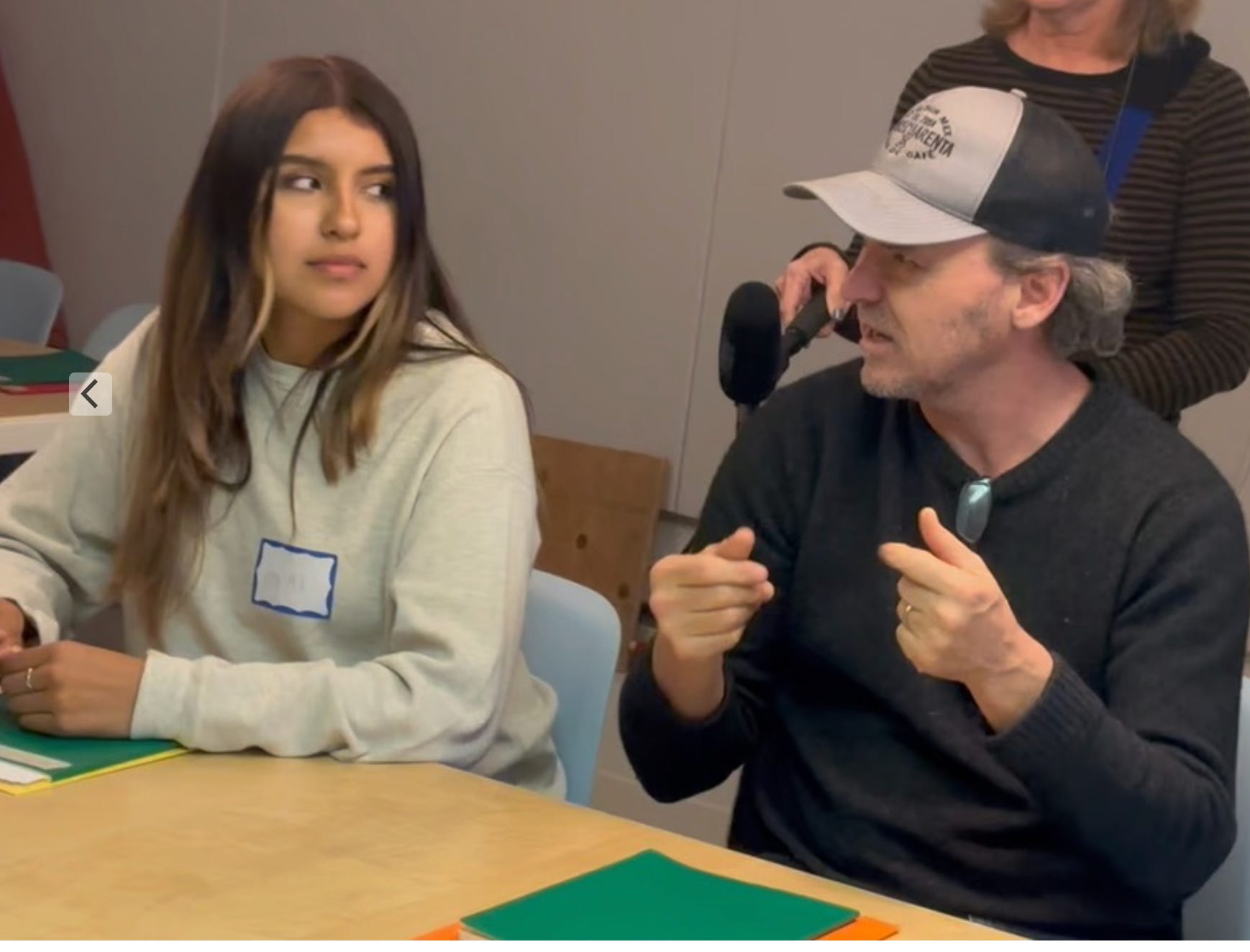
Dave and I go way back. We worked together circa 1996-8, at Salon.com, one of the very first online media publishers, which published, and still publishes, thinky articles on society and culture. They also host thoughtful online conversations and civil discourse. Again, it was an amazing time to be online.

Now I’m on the board of McSweeneys, the publishing company that Dave also founded. It publishes books and magazines, old media. So Dave and I have invested a lot of our energy into making places and spaces for writers doing creative work, finding an audience and getting paid. But these are fraught times for writers. The writers in Hollywood are on strike, AI is taking their jobs, teachers are saying the high school essay is dead. You’re here too and you’ve seen it—there’s a lot of dread to go around. Think we’re reactionary luddites? I don’t think so. Techno-optimists turned tech skeptics, maybe. I think we’ve all become a lot more wary since our salad days.
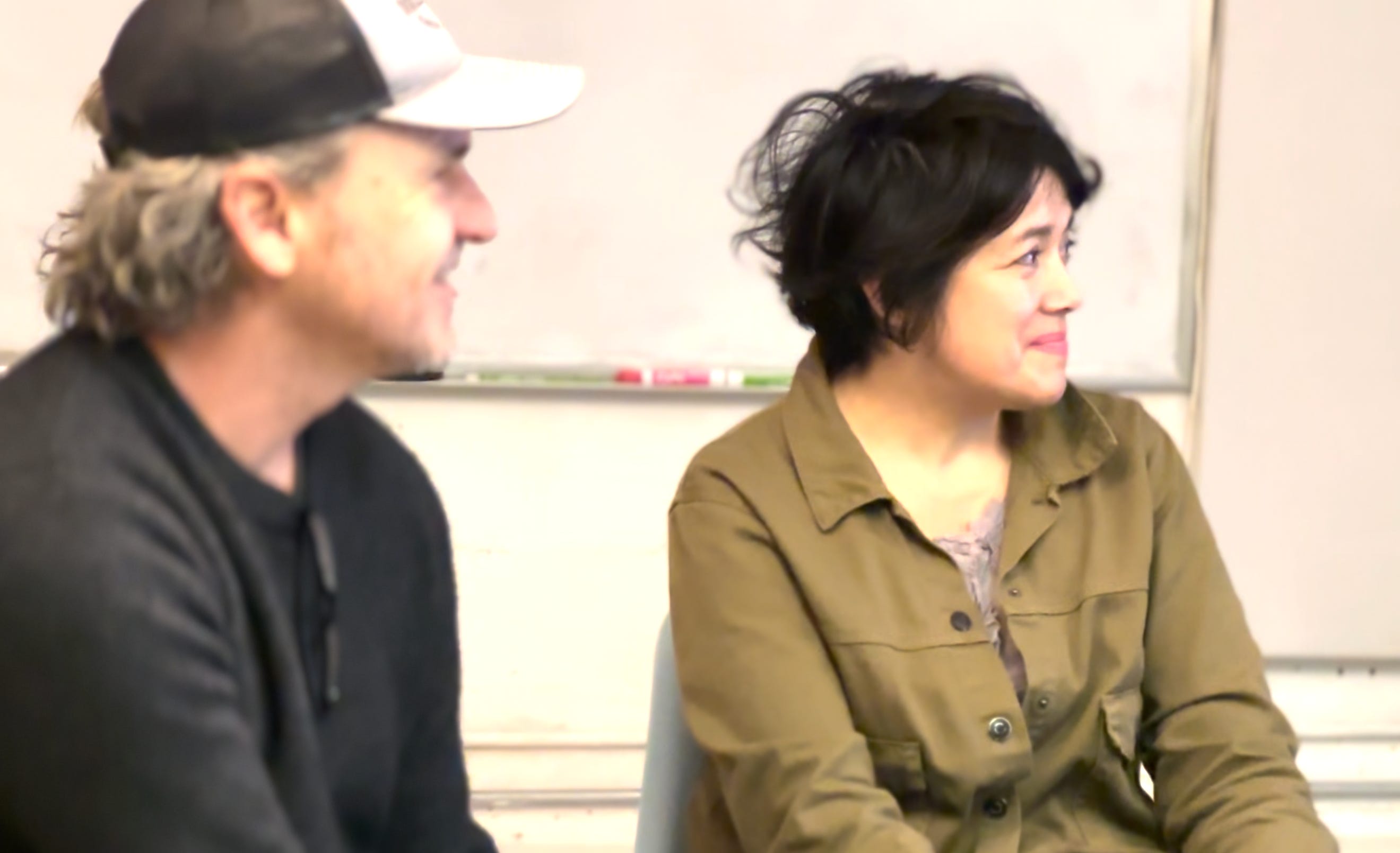
In any case, there’s a lot of these values and thinking and ideation in this podcast. It is a special episode because Dave and I are old friends, and share a lot of the same hopes for the humans. So give it a listen!

I’m so proud of this podcast, Ingenious, which was the co-creation of me and my friend and producer Mary Beth Kirchner, with the tireless assistance of Jyri Engestrom and Beth Malin and the Yes VC team and a host of others. Including the brilliant guests who have always found a way to surprise me, energize me and pave new avenues of thought. I hope it’ll do the same for you.

Thanks Dave, for this and all you do. How far that little candle throws his beams! So shines a good deed in a weary world.


Some resources:

Thanksgiving debunked

I asked my friend who hates Thanksgiving why he hates it and he said because it is a holiday based on gluttony. But every culture has a harvest festival, I said, every culture has feasts. Since time immemorial. Thanksgiving is just the latest version. The problem with it, by my thinking, I continued, is that feasting doesn’t make sense any more. It made sense during times of scarcity and hunger, but in an era of overabundance and overconsumption it seems excessive. Which is not to say we have eliminated hunger, but we live in a strange world where you can be both obese and starving at the same time. For lack of nutrition.

Lots of other holidays that have a less component, candy, mostly, like Halloween and Valentine’s Day. And of course there are birthday cakes. But sugar isn’t a special treat any more. It is something we have too much of and should probably avoid. But to my friend’s objection: I said, That’s just the food part! I said. I like the gathering of friends and family part, and the gratitude.

Here’s a NY Times article that debunks many of the Thanksgiving myths we grew up with in school, its possible origins in genocide or enslavement, and the myth of the Pilgrim. The Pilgrim! I didn’t know this, for example:

It’s been taught that the Pilgrims came because they were seeking religious freedom, but that’s not entirely true, Mr. Loewen said.

The Pilgrims had religious freedom in Holland, where they first arrived in the early 17th century. Like those who settled Jamestown, Va., in 1607, the Pilgrims came to North America to make money, Mr. Loewen said.

“They were also coming here in order to establish a religious theocracy, which they did,” he said. “That’s not exactly the same as coming here for religious freedom. It’s kind of coming here against religious freedom.”Also, the Pilgrims never called themselves Pilgrims. They were separatists, Mr. Loewen said. The term Pilgrims didn’t surface until around 1880.

There is a constant unearthing of truths obscured by myths. Bogus histories and bullshit. Thus, the National Day of Mourning.

There is nothing wrong with gratitude and gathering, and even occasional feasting, which also have a long history. Happy Thanksgiving!

  • An image from Dragon’s Delusion by Kongkee, which I saw this weekend at the Asian Art Museum.
  • Amazing Tagalog singers doing karaoke at Via Mare in Daly City on Friday night too, along side enormous portions of sinigang and chicken adobo. We tried all the delivery options for Filipino food in San Francisco, but none were anywhere near as good as Via Mare. But I didn’t know they also had live entertainment!
  • I found this article by Paul Krugman to be edifying on how Democrats can work with and around a Republican party that is more interested in investigating Hunter Biden than in governing, and who lack any kind of mandate other than thwarting Democrats, preventing the rich from paying too many taxes, and eliminating aid to people in need.
  • Yes, the imminent demise of Twitter, the departure of nearly all responsible parties, the readmission of Trump and the general malaise striking all the other social media platforms at the same are inspiring me to write my blog again. Hooray for Independent Online Media! Delighted.

Complex Personhood

Because I am teaching a course on dystopian literature I am re-reading 1984 and Brave New World, while also rewatching Avery Gordon’s talk on The Utopian Margins, and re-reading the parts of Ghostly Matters that deal with Complex Personhood. Here’s an excerpt:

“It has always baffled me why those most interested in understanding and changing the barbaric domination that characterizes our modernity often–not always–withhold from the very people they are most concerned with the right to complex personhood. Complex personhood is the second dimension of the theoretical statement that life is complicated. Complex personhood means that all people (albeit in specific forms whose specificity is sometimes everything) remember and forget, are beset by contradiction, and recognize and misrecognize themselves and others. Complex personhood means that people suffer graciously and selfishly too, get stuck in the symptoms of their troubles, and also transform themselves. Complex personhood means that those called ‘Other’ are never never that. Complex personhood means that the stories people tell about themselves, about their troubles, about their social worlds, and about their society’s problems are entangled and weave between what is immediately available as a story and what their imaginations are reaching toward. Complex personhood means that people get tired and some are just plain lazy. Complex personhood means that groups of people will act together, that they will vehemently disagree with and sometimes harm each other, and that they will do both at the same time and expect the rest of us to figure it out for ourselves, intervening and withdrawing as the situation requires. Complex personhood means that even those who haunt our dominant institutions and their systems of value are haunted too by things they sometimes have names for and sometimes do not. At the very least, complex personhood is about conferring the respect on others that comes from presuming that life and people’s lives are simultaneously straightforward and full of enormously subtle meaning.”

Complex personhood might be the thing that Big Brother, your enemies, totalitarian regimes, institutions might be most afraid of, and which they are working tirelessly to suppress. To accept and make space for another person’s complex personhood can be challenging as an individual, and in systems, be they software, constitutions, laws, governments, etc. it can be even more challenging, since there will almost always be someone who doesn’t have a neat space in the grid, and everyone is an exception to someone or something somewhere.

Nice White Parents and Point Omega

Nice White Parents. I listened to the first three episodes of this new podcast about how a Brooklyn school serving mostly black and brown students was harmed by the arrival of the titular Nice White Parents, who flexed their privilege, proceeded to fundraise $50,000 (compared to a prior raise by the PTA of $2,000) and whose kids provided some truly squirmworthy comments. About how school integration may not be so desirable after all, how schools keep failing to support nonwhite kids, and how entrenched inequalities persist, and might be eradicated. This will be a five part series, and has already met with some dissension and controversy, but I am curious to hear the next episodes and see where it goes. Whether or not you agree with the portrayal of the issues or the conclusions, it’s a fascinating listen.

Point Omega. When reading Don DeLillo novels, I often feel as if I have entered a cold, white, vast, fluorescent-lit space, like a data center, interstellar terminal, or morgue. Point Omega was no different. Beautifully structured though it was, a brief 5 chapters, it was set in both the desert and the mind–unforgiving, spare places beyond time’s horizon. We were promised a glimpse of a bighorn ram, which never materialized, and though there were sunsets and occasional glimpses of earthly loveliness, human connection was absent and human relations were reduced to voyeurism, stalking, staring, predation and self-absorption. Who is and who is not a DeLillo Fan? I try, repeatedly, but am not.

Freedom Colonies


As I was reading about Andrea Roberts’ research into “freedom colonies”,  the name bothered me. Freedom ––as I’d always understood it from elementary school, from the Pledge of Allegiance we recited every day, facing the flag and with our hands over our hearts, from Woody Guthrie songs and the Star-Spangled Banner–freedom should be general across the nation, from sea to shining sea, from the redwood forest, to the gulf stream waters, one nation, liberty and justice for all–and not confined to a colony. The word “colony” (per my trusty Barnhart) means “a settlement dependent on another country”–though further back it’s found to derive from cultivation, tilling, inhabiting

Andrea Roberts is a Vassar graduate, and Assistant Professor of Urban Planning at Texas A and M University. She is researching the thousands of historically black settlements, often called “freedom colonies,” that emerged across the United States after the Civil War. There are hundreds of these kinds of communities, these colonies, formed for mutual care and support and protection after the Civil War. “These weren’t places where [African American families] were pushed to,” Roberts said. “They were created on purpose and had ‘anchors,’ such as schools and churches and cemeteries around which the settlements were built.” There are hundreds of communities like this, based on race or religion or gender or just shared values–formed by groups distinct from the dominant culture.

And the dominant culture during restoration the Ku Klux Klan also rose during Restoration in the South. The Freedom Colonies rose during this fraught period and protected their inhabitants against the generalized racism, violence and hostility of that time, which is still with us today, and rising. History and the past are not the same, and it’s important to bring them closer together. But when I see efforts like this one to restore a lost past, I think of what Toni Morrison said about racism:

It keeps you explaining, over and over again, your reason for being. Somebody says you have no language, and you spend twenty years proving that you do. Somebody says your head isn’t shaped properly, so you have scientists working on the fact that it is. Somebody says that you have no art. So you dredge that up. Somebody sats that you have no kingdoms, and you dredge that up. None of that is necessary. There will always be one more thing. 

If you’re black, or queer, or female, or a member of a group that is not the group controlling the story , you’re used to mentally rewriting or actively resisting/ignoring/correcting history as it is told. History and the past are not the same. Do your work! And if your work is history, and the history shows your kingdoms, so be it. 

A significant fight to preserve African-American history is playing out through the auspices of the National Trust and the National Historic Preservation Act, which through its criteria of “architectural significance” has blocked the preservation of modest buildings such as slave quarters, tenements and cabins. Brent Leggs, director of the African American Cultural Heritage Action Fund, is leading the charge on preserving much of this history, including Nina Simone’s childhood home, Joe Frazier’s gym, and John and Alice Coltrane’s home

——————

In my other alumnae monthly, from Smith, I was struck by a related quote from Deborah Archer (Smith ’93): “My parents…understood that access to opportunity meant entering spaces where we were not expected and were not welcome. And, of course, we were met with resistance.” You need to go places you’re not wanted, and say things that the people there don’t want to hear. Archer was a student at Smith a few years after I was–I spent my freshman year there. Even at Smith, Archer had a note slid under her door that said “N—— go home”. She was not surprised. Growing up in Hartford, Connecticut “KKK” was once sprayed on the side of her house.

“This is where people can learn to rely on each other”

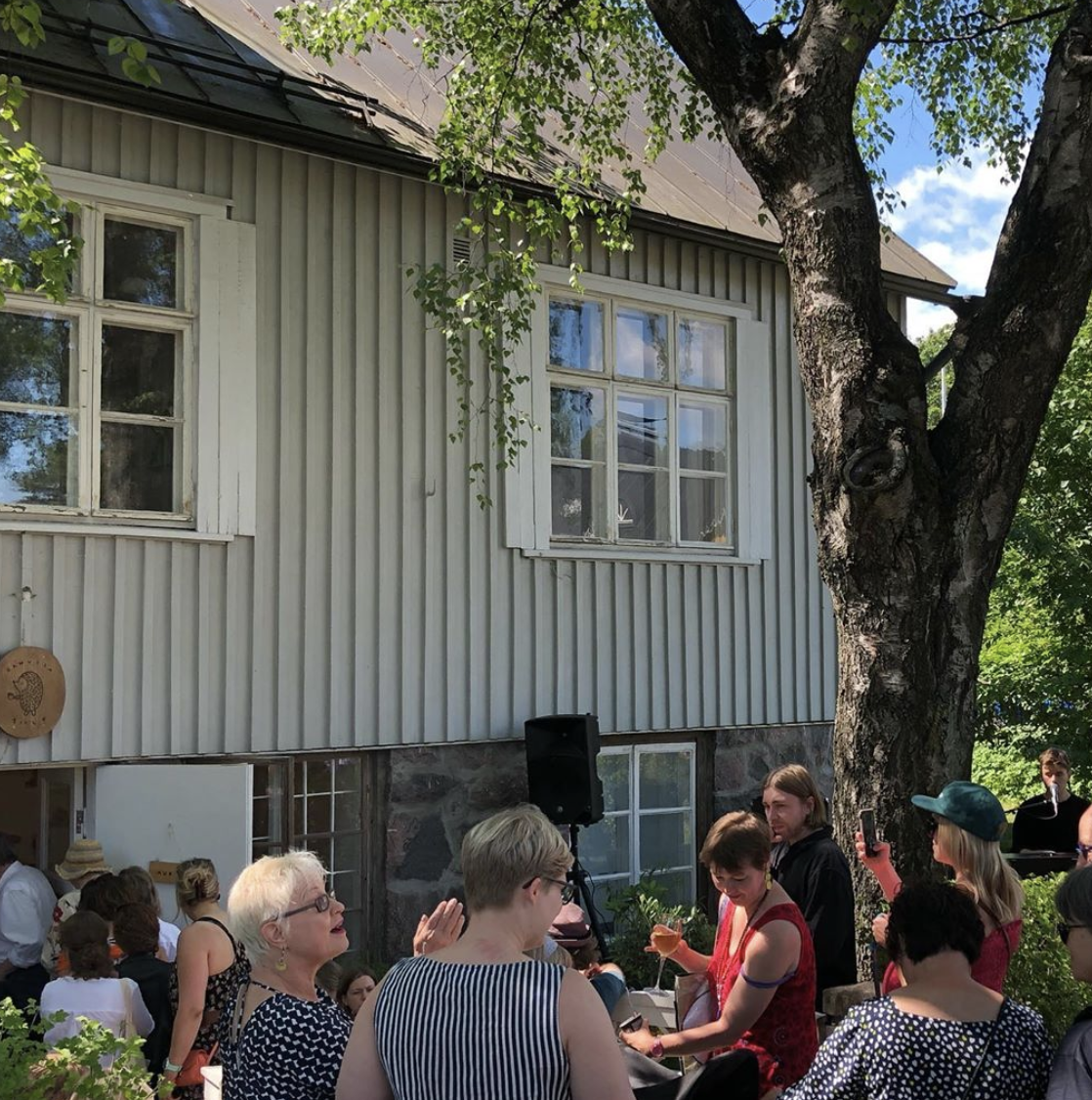
An interview with Jyri about Kahvila Siili, the café we run in the summer in our neighborhood in Helsinki came out this week. “Kahvila Siili” means “hedgehog café”–there are a lot of hedgehogs in the neighborhood, though we didn’t see any, as we usually do, at the end of the summer this summer–some people say they are being driven out by the increased heat from climate change.

“Our fortune, in the next decades, will be intricately connected to our community structure,” he says on sunny afternoon in the front garden of the café. “A place like this is not just about vegan food or recycling waste but allowing people to rely on each other as we face the challenges of climate change.”

Spoken like the entrepreneur, investor and sociologist he is. Here are our neighbors coming out for the opening party at the beginning of the summer:

Screen Shot 2019-08-15 at 12.49.10 PM


Harassment, Redress & Roman Law

It seems as if, on the internet, harm can be done to others immediately, continuously, thoughtlessly, and unceasingly, and worse, without consequence to the perpetrator, who enjoys only satisfaction, righteousness, and immunity. It seems that a willingness to participate in conversations online is an implicit agreement to be subjected to harassment and abuse. Countless people–let me just say, most people I know with active online lives–have suffered this. People have committed suicide because of this abuse, old and young, but especially the young; countless people have withdrawn from both the online and offline world after having been subjected to online bullying; the victims, most often coming from the most vulnerable, protected groups, continue to suffer and retreat further from the full embrace of the world and its possibilities.

Those who suffer from racism, sexism, harassment and a daily parade of micro-aggressions have no recourse under any company’s Terms of Service, not to mention the law, unless an actual assault has taken place–and as is well documented, few of those cases are prosecuted, and of those, a vanishingly small number result in conviction. The punishments mostly accrue to the victim reporting the crime.

Online, in the various communities I’ve participated in, built and managed, I’ve written a half dozen Community Guidelines, and spent countless hours thinking through this problem. I’ve kicked countless perps off a dozen web sites, banned, muted and used secret troll-thwarting ninja techniques to perma-ban awful people using robust, well designed admin interfaces. I’ve even reported bad actors to the FBI.  I couldn’t think of how, under the law, the people who suffer from these agonies could be protected from, or receive redress from the thugs whose wrongs they had endured.  But today I happened upon an article about sexual harassment and Roman law, which presented a vision of the law that I hadn’t thought possible: Here’s what it said.

From its earliest codification in the Twelve Tables of 450BC, Roman law gave people a right to recover damages for personal injury.

The law expanded over the centuries to protect an increasingly wide range of personal rights by means of an action known as the actio injuriarum (or action for injuries). By the time of the publication of the Digest of Justinian in 533AD, the action protected three groups of rights:corpus (bodily integrity), fama (reputation), and dignitas (dignity).

This is where the major difference lies between our English-based law of torts and Roman law: although the law of torts allows a plaintiff to sue for bodily injury and defamation, it offers no protection for dignity and therefore no right to sue for verbal insult, no matter how offensive.

The actio injuriarum lives on in modern legal systems. A good example is South Africa, whose legal system is based on Roman law. There, the action has been used to recover damages for sexist verbal insults, unwelcome propositioning for sexual intercourse, and unwelcome exposure to pornography. The action also protects privacy, so it has been used to recover damages in cases involving peeping Toms, stalking, and the publication of intimate facts about people’s private lives.


Online Communities Gone Bad (and getting them back on track)

After my appearance on the podcast Masters of Scale, a lot of people have written to me for advice on managing their communities. Here’s one request and my response, which I posted with permission, in the interest of making the internet a more civilized place.

Things had gotten so bad in this founder’s community, that even employees were thinking of leaving. The team felt hamstrung by their users. He explains:

When we first started our community I was in there posting every day setting the tone. Over the years as the company scaled I chose to spend time on other things beside posting in the forum. Gradually over time things got bad…then really bad…now horrible. 5-10 members of the community have started berating everyone in between posting useful content. Do you have any principles or experiences I can draw upon to think about how to solve this?

Yes, I wrote back, this community has run amok. A garden needs both fertilizer and weedkiller. But most of all it needs a gardener. Go back in and participate as much as before. Community manage with a heavy hand. Promote good people, respond to them.  Make them shine. Build good admin tools to silence bad actors.

You have to take a “iron fist in velvet glove” approach; warn borderline cases, and discuss their behavior with them. Often they can be rehabilitated. But for those who will not change: ruthlessly delete the accounts of abusive people, irrespective of their contributions. Keeping 5-10 bad people have undoubtedly lost you dozens, even hundreds, that you don’t even know about. They’ve stifled other people who are still participating and darkened the atmosphere of the whole community.

Community management is art, not science. There is no black and white when dealing with people. Choose your community team carefully, and find people with good instincts. Have all members of the team participate in the community. And be present there yourself.

When the internet is over

“When the Internet is put into storage with the 8-track, things will be different. People will talk about stuff again, or go shopping at a store, or journey to someone’s house to watch a film. Who knows? No one can guess what form it will take, of course, but like Christianity, Wiki-Google’s days are numbered. It is up to us to make sure its time is short.”

– I.F. Svenonius

If you haven’t already, get yourself a copy of Censorship, Now!